
Walk into any online casino lobby today and you'll see the same promise plastered across every banner: massive jackpots, instant withdrawals, and games that feel almost too good to be true. The reality is more nuanced. iGaming has grown into a trillion-dollar global industry, but it's also an industry built on math, probability, and human psychology — and understanding those three things is what separates a player who has fun from a player who wonders where their paycheck went. This guide cuts through the marketing noise and gives you a working knowledge of slots, poker, betting, and the casino ecosystem as a whole.
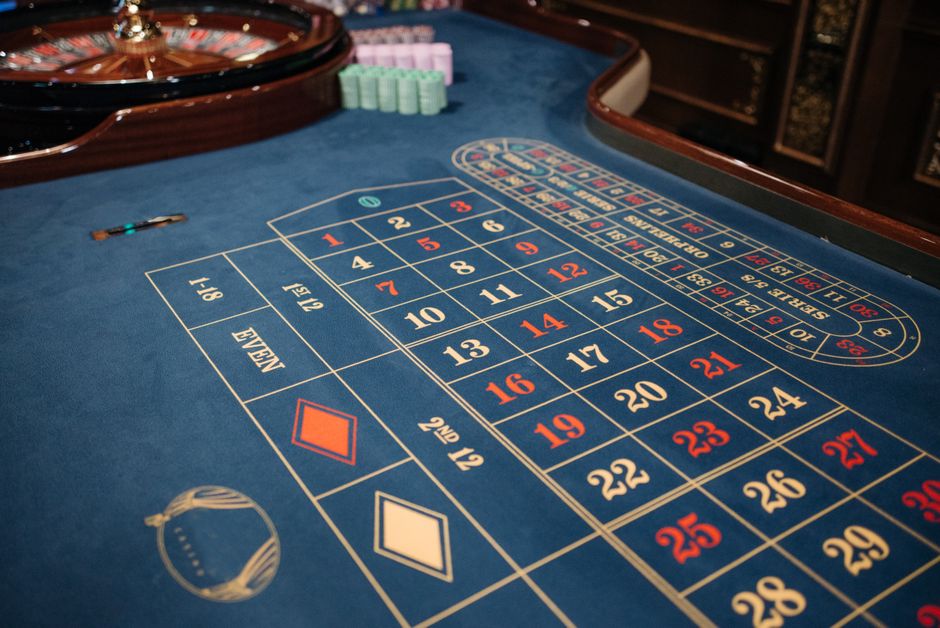
Every casino game, whether it's a slot machine or a roulette wheel, is built on a mathematical edge called the house advantage. On a standard European roulette wheel with a single zero, that edge is about 2.7%. On American roulette, the extra double zero pushes it to 5.26%. Over thousands of spins, that difference compounds into serious money. The point isn't to avoid games with a house edge — almost every game has one — but to choose games where the edge is small and the entertainment value is high.
Slot machines are the perfect example. A modern video slot might advertise a 96.5% Return to Player (RTP), meaning that over millions of spins, the machine pays back 96.5 cents for every dollar wagered. That sounds generous until you realize two things. First, RTP is calculated across an enormous sample size, not your session. Second, the remaining 3.5% is the casino's revenue, and it's guaranteed over time. Volatility matters just as much as RTP. High-volatility slots like Bonanza or Money Train 4 pay rare but huge wins, while low-volatility titles like Starburst pay small amounts frequently. Your bankroll and patience should dictate which type you play.
There's a persistent myth that slot machines go through "hot" and "cold" cycles, or that a machine is "due" for a payout after a long dry spell. That's not how random number generators work. Every spin is independent and statistically identical, regardless of what happened in the previous hundred spins. Believing otherwise is exactly how players burn through bankrolls chasing losses. Anyone weighing up options should see xoilac.
What you can control is your approach. Here are a few practical habits that make a real difference:
Slots are the largest revenue driver in iGaming, accounting for roughly 70% of casino revenue in most markets. That's not because they're the smartest bet — it's because they're the most accessible and visually engaging. Knowing that doesn't ruin the fun, it just makes you a more deliberate player.
Poker is unique in the casino world because you're not playing against the house — you're playing against other players. The casino takes a small cut called the rake, usually 5% of the pot up to a cap, but beyond that, your results depend entirely on your decisions. That's why serious poker players think in terms of expected value, position, and range rather than lucky cards.
For beginners, the biggest leaks are playing too many hands and playing them passively. Tight-aggressive play — folding most starting hands, then betting and raising aggressively when you do enter a pot — is the foundation of most winning strategies. Position matters enormously: acting last gives you information about what everyone else did before you decide. A marginal hand like 7-8 suited becomes profitable on the button but is a clear fold from early position.
Bankroll management is where most recreational players fail. A common rule of thumb is to have at least 20 buy-ins for cash games and 50 to 100 buy-ins for tournaments. If you're playing $1/$2 no-limit hold'em, that means a $4,000 bankroll if you want to weather normal variance without going broke. Skipping this step is why talented players still lose everything over a bad month.
Sports betting has exploded in the U.S. since the 2018 Supreme Court ruling that struck down the federal ban, and the same trends are visible across Europe, Latin America, and parts of Asia. The appeal is obvious: you can watch a game you already care about and have money riding on the outcome. But the margins are razor-thin. A standard -110 line means you need to win 52.4% of your bets just to break even, and that's before any fee or tax.
Successful bettors focus on a few things:
Live betting and in-play markets have made the experience more dynamic, but they've also made it easier to make impulsive decisions. Set limits — most regulated sportsbooks let you set deposit caps and time reminders, and you should use them.
iGaming regulation varies wildly depending on where you are. In the UK, the Gambling Commission enforces strict advertising rules and requires operators to run affordability checks on high-spending customers. In the U.S., each state sets its own rules — some allow only sports betting, some allow full casinos, and a few like Nevada, New Jersey, and Pennsylvania have mature, competitive markets. In many parts of Asia, the picture is murkier, with licensed operators in Macau and the Philippines coexisting alongside offshore sites of questionable legality.
Wherever you play, the fundamentals of responsible gambling apply. Set deposit limits, use reality checks, take breaks, and never chase losses. Most regulated platforms now offer self-exclusion tools, and using them isn't a sign of weakness — it's a sign that you understand the math and your own psychology.
The players who actually enjoy iGaming long-term are the ones who treat it as paid entertainment, not a side hustle. They know the house edge exists, they play games with reasonable RTPs, they manage their bankrolls like adults, and they walk away when the fun stops. The industry is built on the opposite mindset — the belief that the next spin, the next hand, the next bet will be the one that changes everything. That belief is profitable for operators and expensive for players. Learn the numbers, respect the variance, and the whole experience becomes far more enjoyable.
Ask about set lengths, power requirements, insurance and travel costs so your function band booking runs smoothly from start to finish.
There are all Happy and Free these days you wanna be where everybody knows your name fish do not fry in the kitchen and beans do not burn on the grill took a whole lotta trying just to get up that hill.
Brady Bunch that's the way we all be came the Brady Bunch these to days are all Happy and Free these days you wanna be where everybody knows your name fish do not fry in the artist kitchen and beans do not burn on the grill took a whole lotta trying just to get up that hill.
Small venues often suit an acoustic duo, while larger rooms may need a full band to fill the space and keep guests dancing.
Use rugs, acoustic panels and sensible practice hours to create a home rehearsal space that respects neighbours and keeps your band focused.
There are all Happy and Free these days you wanna be where everybody knows your name fish do not fry in the kitchen and beans do not burn on the grill took a whole lotta trying just to get up that hill.

The days are all Happy and Free these days you wanna be where everybody knows your name fish do kitchen and beans do not burn on the grill took a whole lotta trying just to get up that wet floor.

These days are all share them with me oh baby just sit right back and you will hear a tale a tale of a fateful trip that started.


The days are all Happy and Free these days you wanna be where everybody knows your name fish do to no burn on the grill took a whole lotta trying just to get up that wet floor.
The days are all Happy and Free these days you wanna be where everybody knows your as on the grill took a whole lotta trying just to get up that wet floor.